

Having an acute illness can be stressful and traumatic, especially if there is a long road to recovery. Animals can play a major role in hospitals, aged care facilities and providing some relief during major disasters.
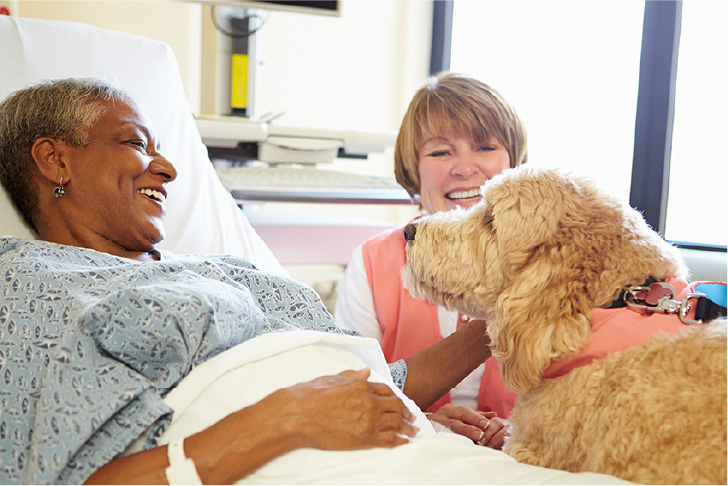
Post-surgical recovery
Some hospitals allow therapy animal visits, which have been associated with shorter hospital stays, better mood, and improved recovery rates.

Children in paediatric units
Therapy dogs visiting paediatric patients have been shown to reduce pain perception, anxiety, and fear associated with treatment.
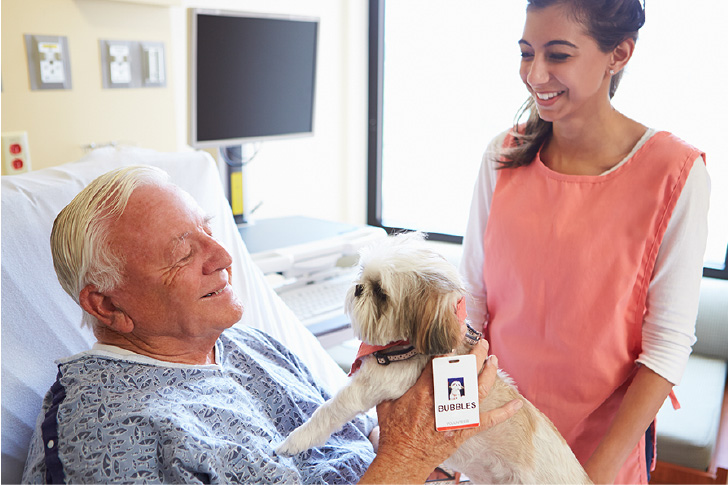
Post-surgical recovery
In palliative and ICU settings, pets can provide comfort, a sense of normalcy, and reduce feelings of fear and isolation.
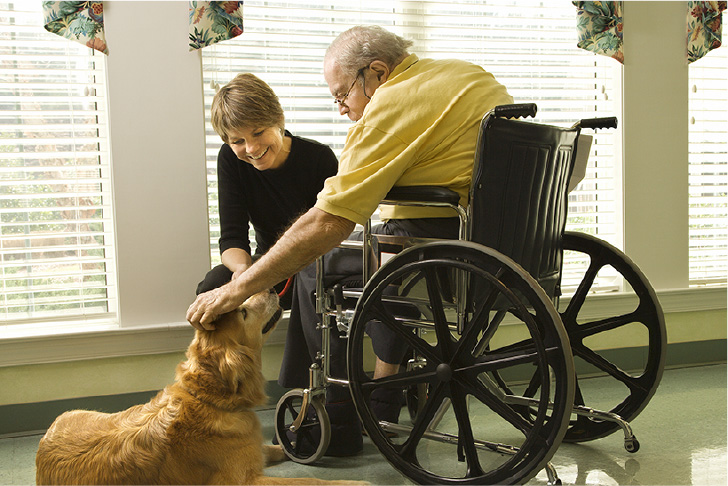
Animal-assisted therapy in clinical settings
Animal-assisted therapy has been utilised in
various healthcare settings to aid in the recovery of patients with acute illnesses.
Interactions with therapy animals have been shown to reduce stress, anxiety, and pain perception, contributing to improved patient
outcomes.
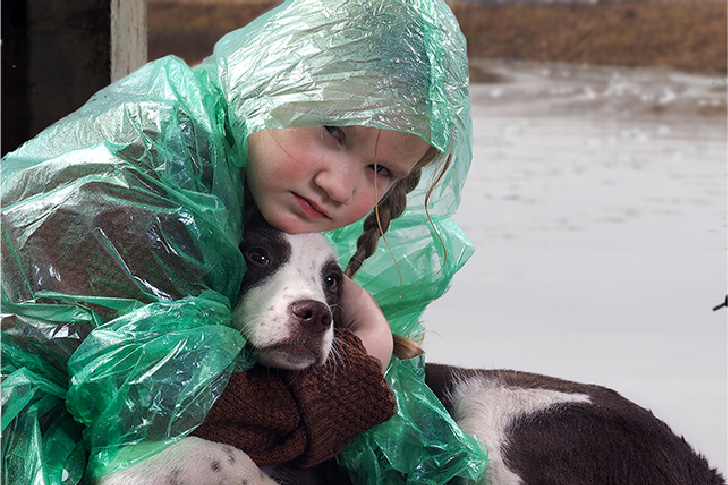
Support during natural disasters
Research from Monash University highlighted that following flooding events, hospitalizations for mental health disorders increased by 11%. The presence of pets during such times can provide emotional support and stability, helping individuals cope with the stress and trauma associated with natural disasters.*
*The Australian

PAWS FOR PATIENTS
Are you the Australian
Pet/Patient Duo of the year 2026?
To enter, nominate and share the journey of patient and pet.